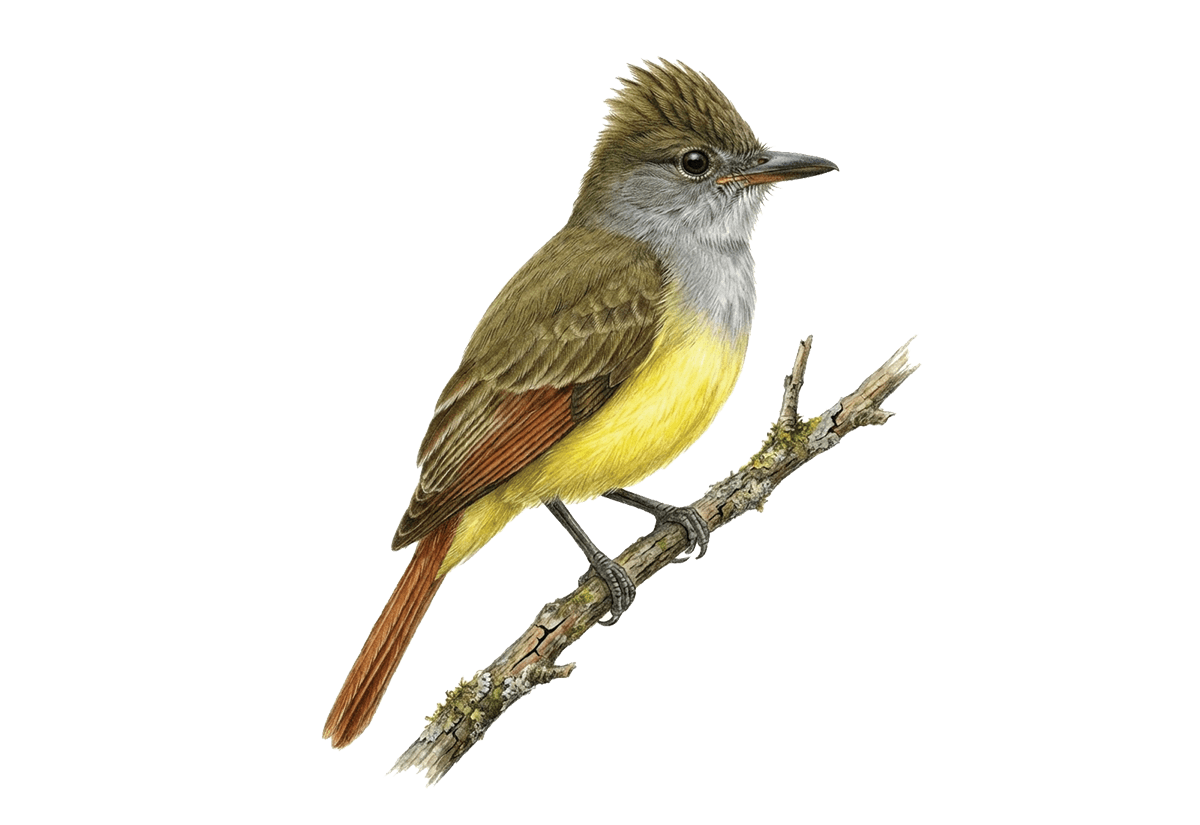
Ruby-throated Hummingbird
Length: 3.4"
Weight: 0.1 oz
Wingspan: 4.3"
Monthly presence
J
F
M
A
M
J
J
A
S
O
N
D
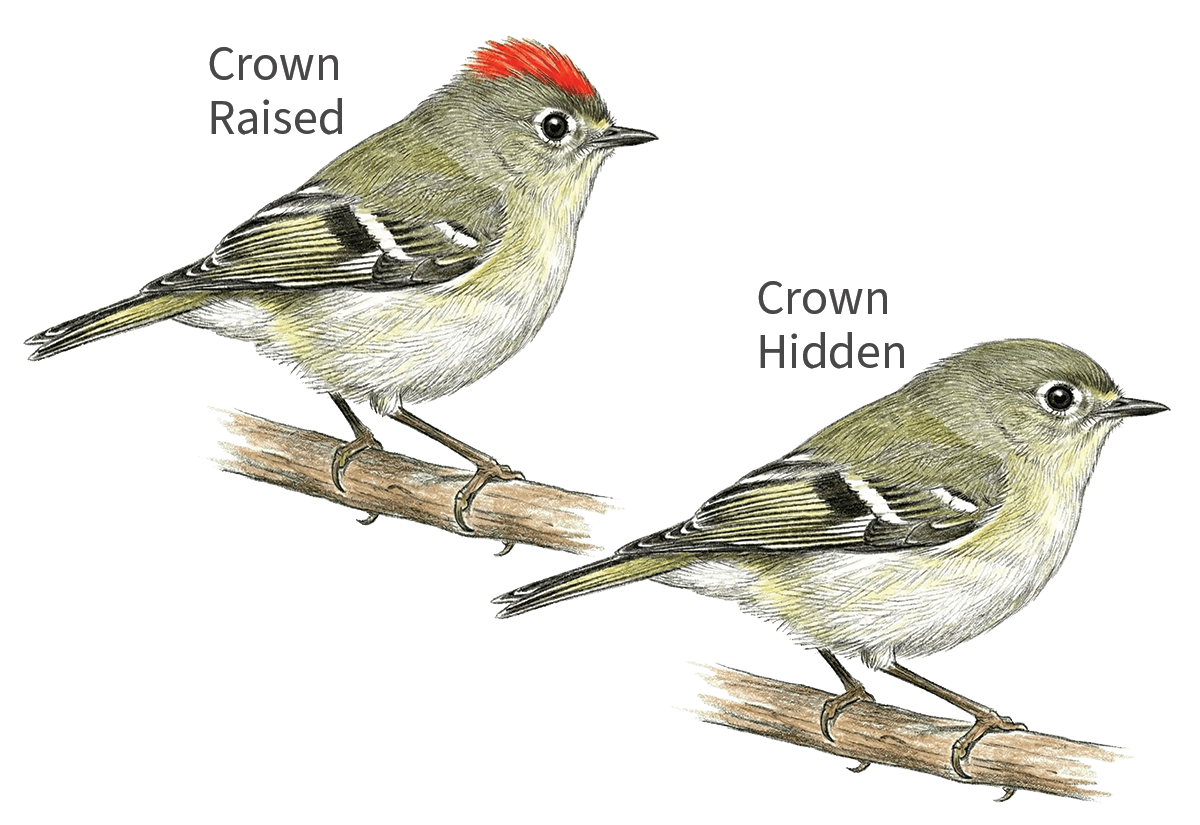
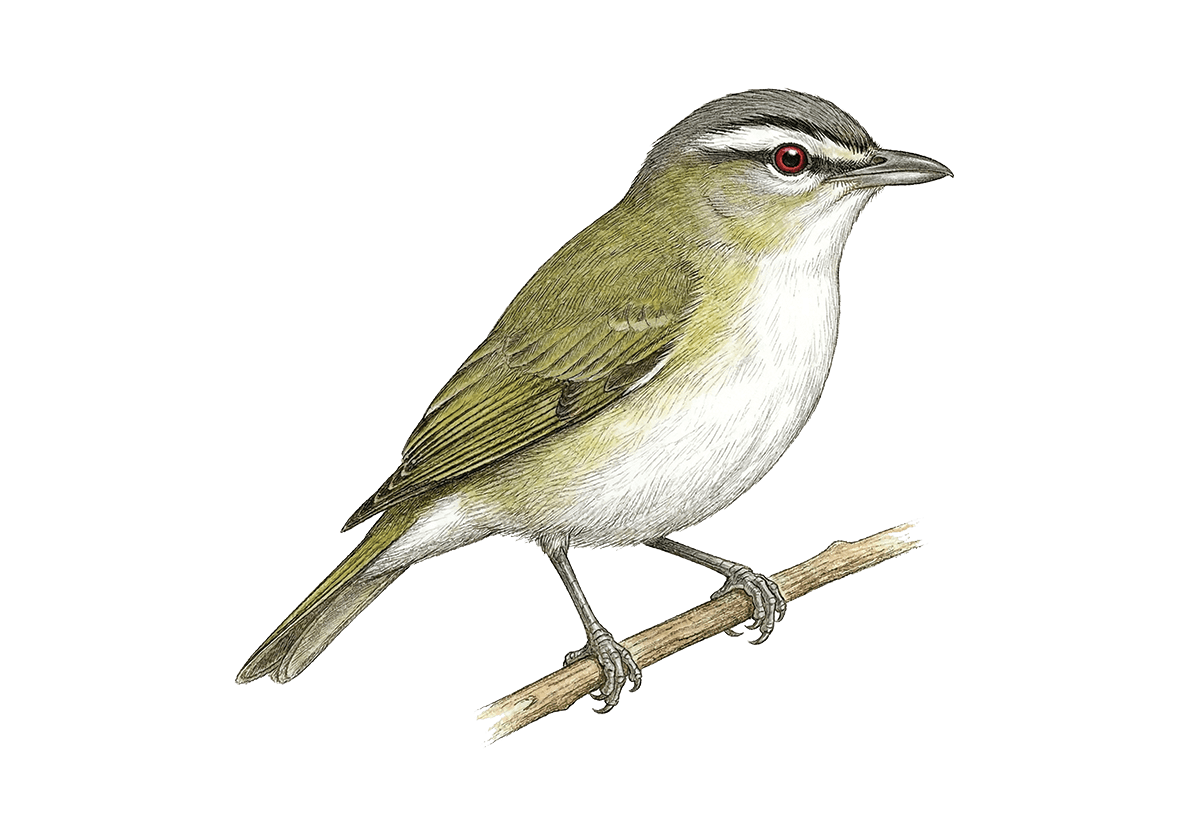
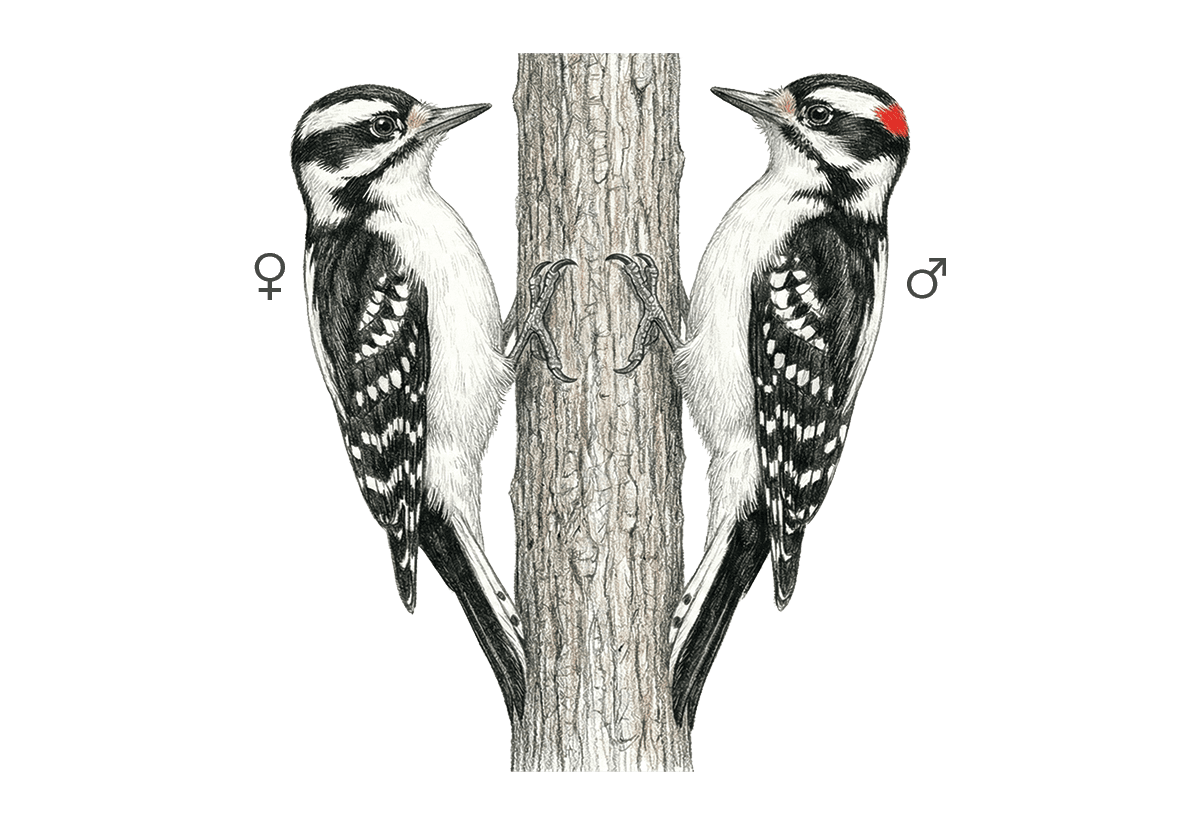
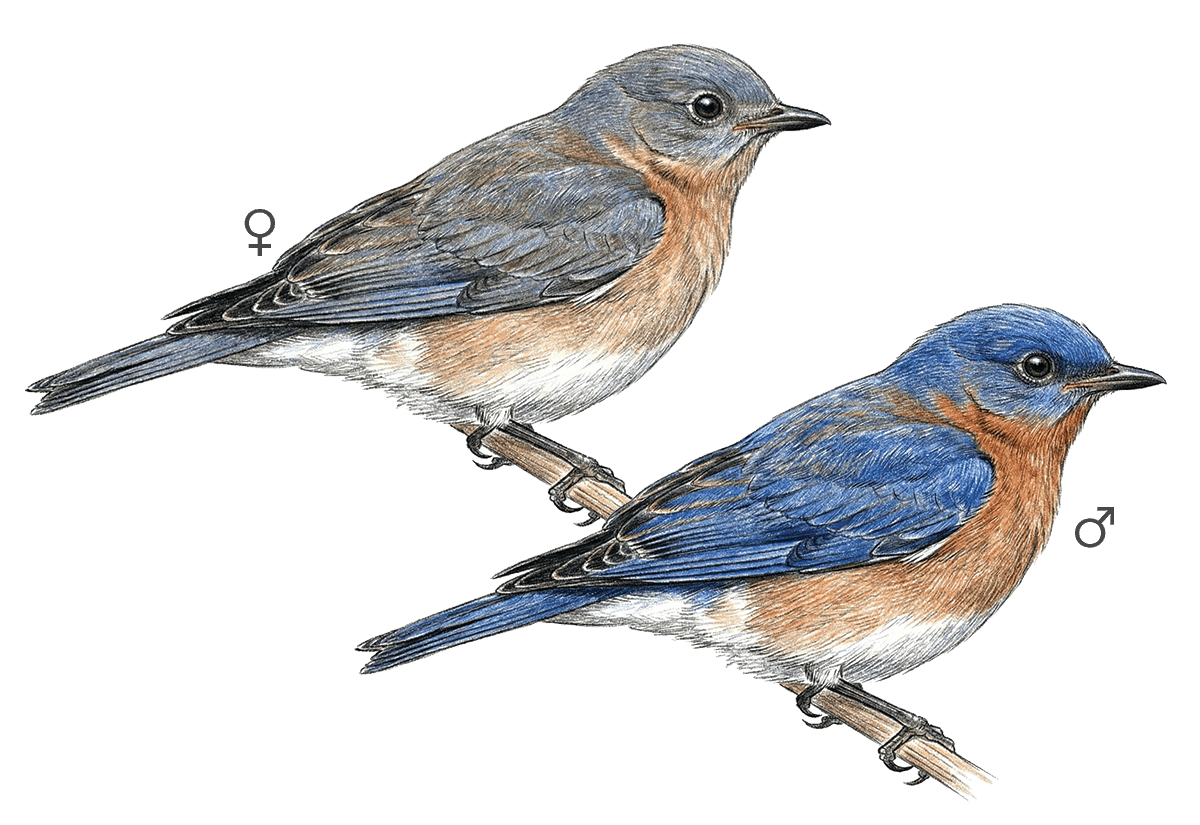
The list below shows the 101 birds you’re most likely to see in the Great Swamp National Wildlife Refuge, plus a few birds so iconic to the area it would’ve been a shame not to include them, too. For each listed species, you’ll find:
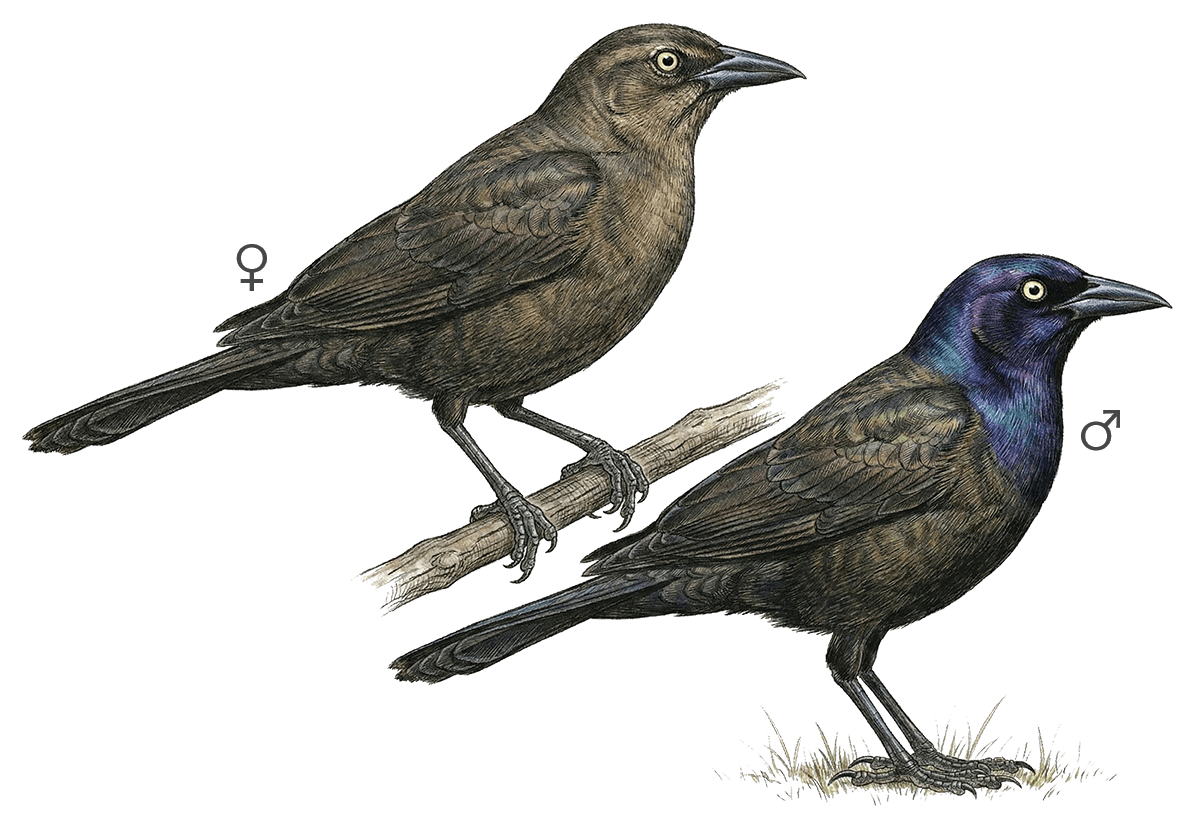
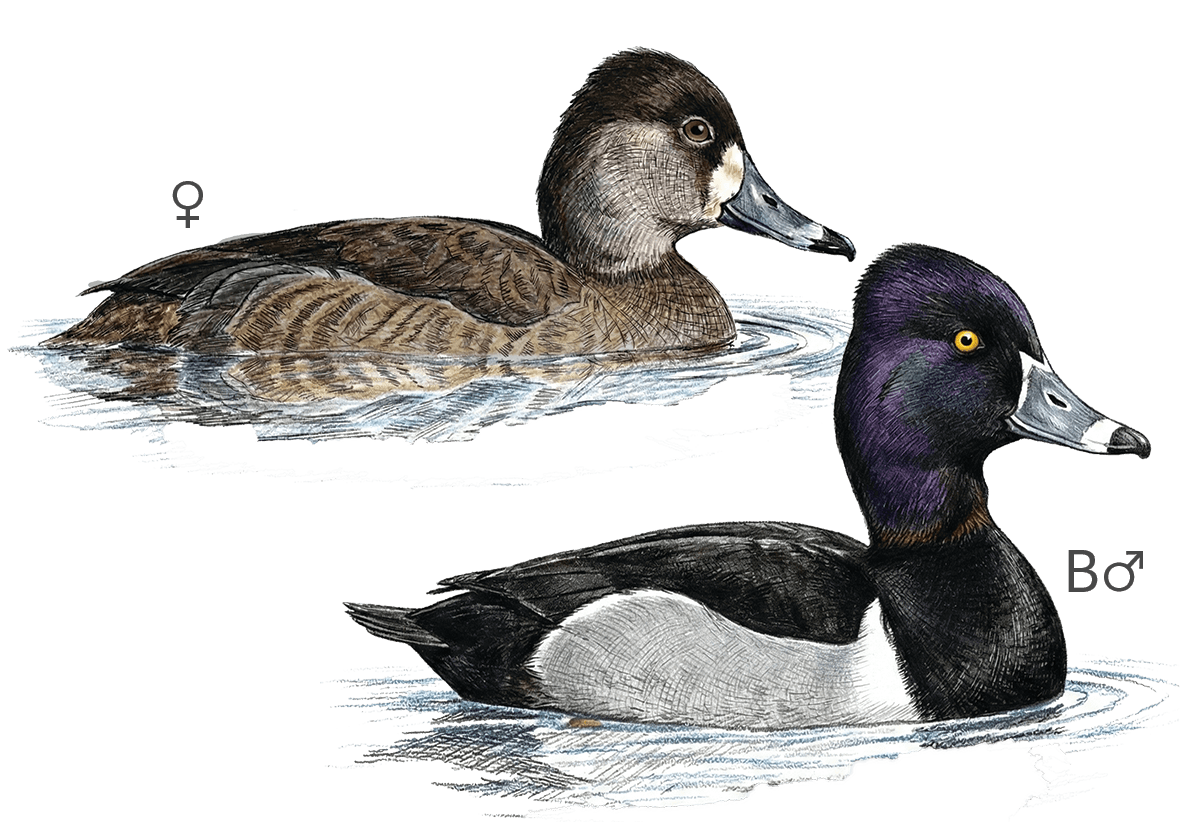
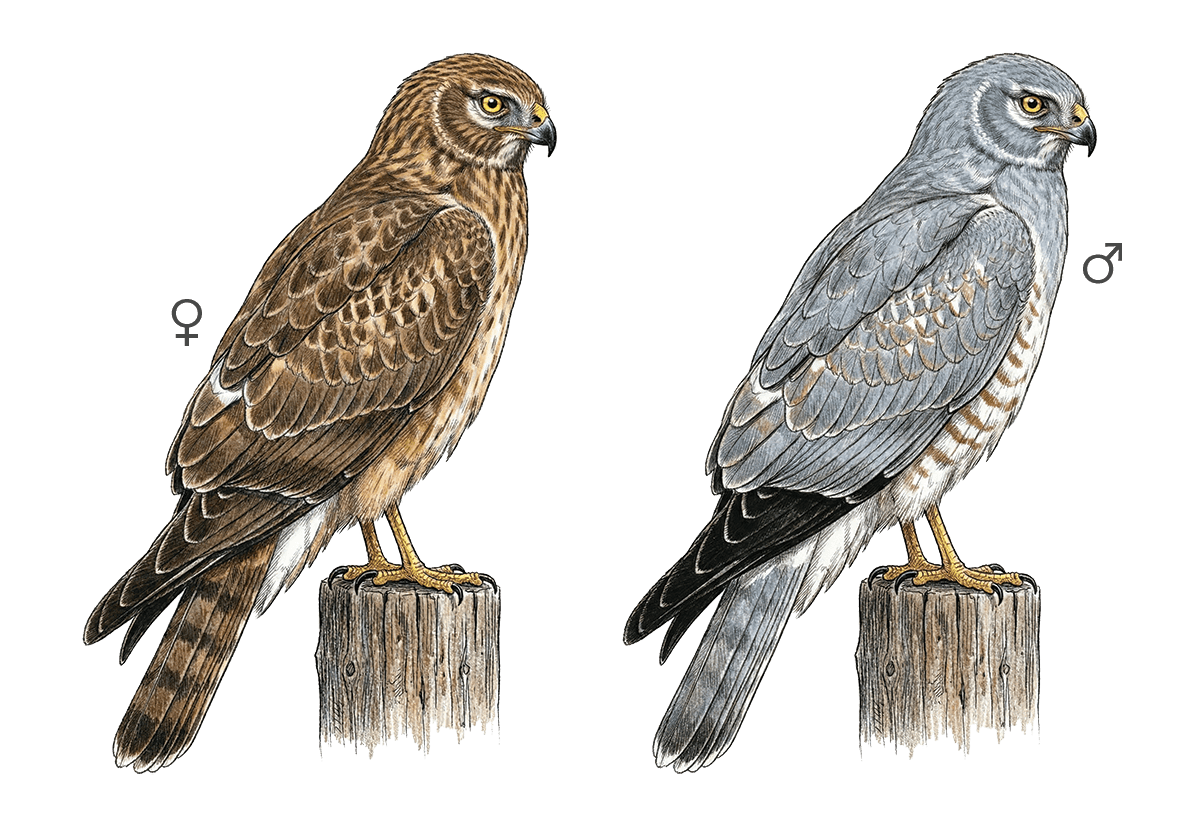
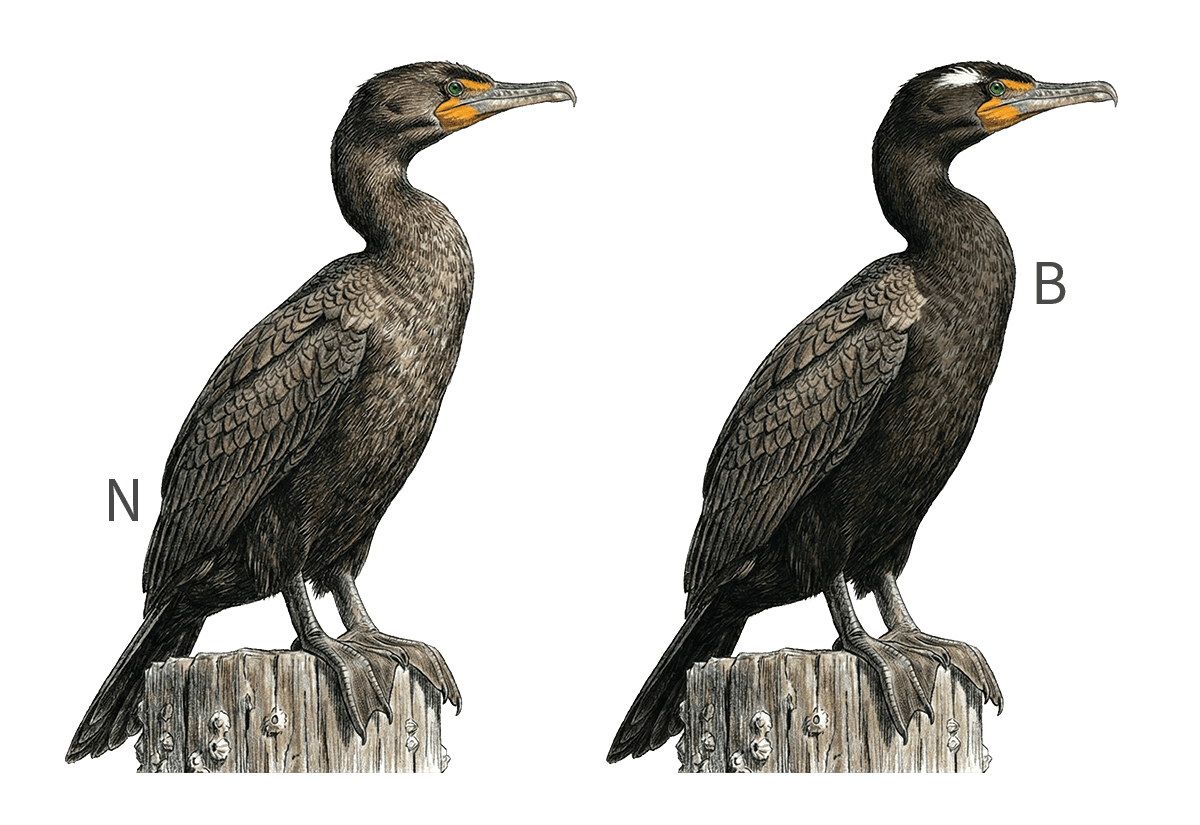
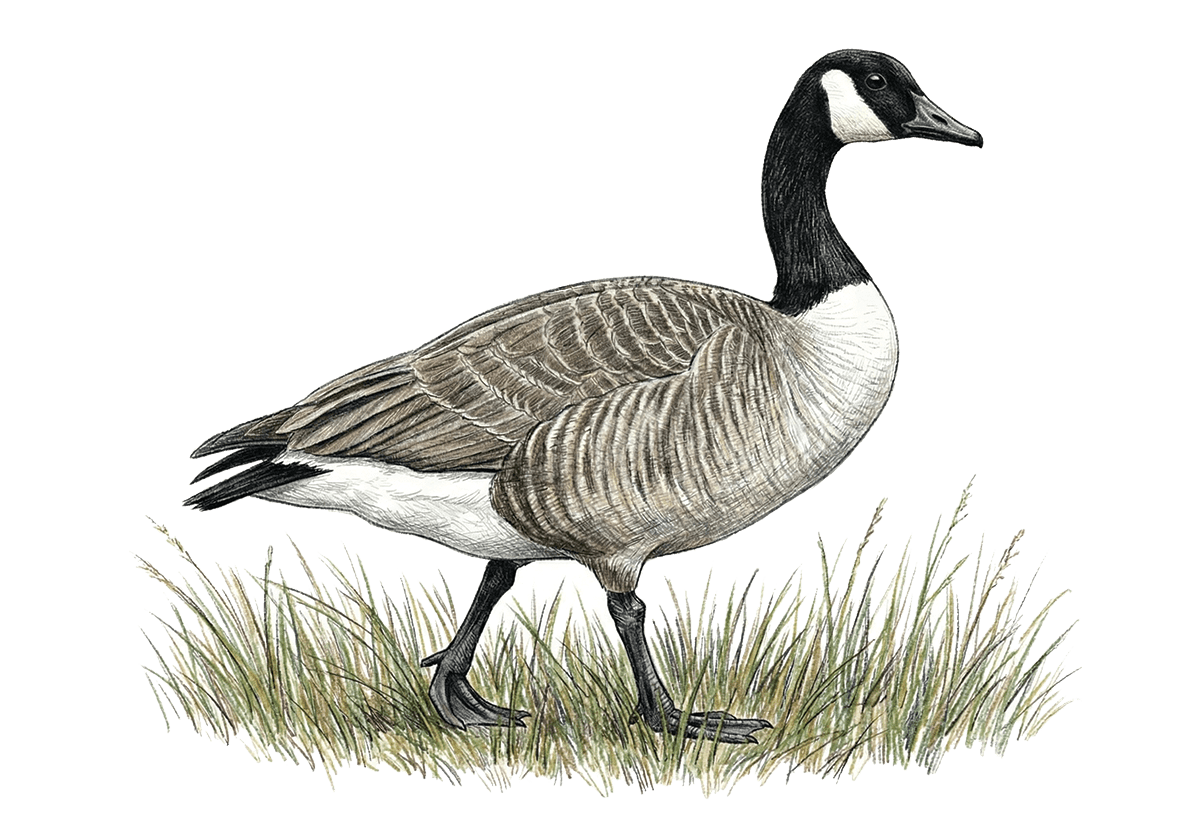
An illustration: Including (if necessary) symbols that explain if the birds within a species look different from each other based on geographic region, sex, time of year, age, or other factors.
Key stats: Average length, weight, and wingspan
A Presence Indicator: A color-coded month-by-month breakdown of when that species is or isn’t present in Great Swamp National Wildlife Refuge (the darker the color, the more abundant the bird is in that month).
The birds are listed in order of length, from smallest to largest. Filters on the page let you re-order the list as you prefer.
The Great Swamp National Wildlife Refuge is an 8,000-acre wilderness area nestled among some of the most densely populated parts of north-central New Jersey. Its unlikely location—a mirage-like wetlands paradise amid endless highways and suburban sprawl—makes the Great Swamp a haven for migratory and native birds, plus myriad species of local wildlife including deer, foxes, black bears, turtles, fish, frogs, and even the occasional bobcat. According to the latest eBird data, over 253 bird species have been seen at the Great Swamp, making it one of the hottest hotspots for birding in the region. Access to all areas of the Great Swamp is free (including parking), and you don't need any tickets or permits to enjoy everything that the refuge has to offer. The refuge is open dawn to dusk every day of the year.
I've been hiking and birding throughout the Great Swamp since the 1990s, and in this guide I've recapped some of the best spots and insider insights I have amassed over the years I've spent observing the birds and wildlife that inhabit the swamp. No guide could ever convey all of the nuance, facts, and details that make the swamp so special, so if you have any feedback, corrections, or additions to this guide to share, please contact us.

The sign at the main entrance to the Great Swamp at Pleasant Plains Road (aka “Wood Duck Way”)
Most of the Great Swamp is wild an inaccessible to people. The parts that are accessible comprise these three areas, each of which has its own unique features and birding opportunities:
The Helen C. Fenske Visitor Center
The Wildlife Observation Center
The Wilderness Trails
If you’re a first-time visitor to the Great Swamp, this is the place to start. Located in Harding Township about a mile southeast of the intersection of Lees Hill Road and Pleasant Plains Road (also called “Wood Duck Way”), the Helen C. Fenske Visitor Center (Google Map) is only a ten-minute drive from the local hubs of Morristown, Madison, and Bernardsville. Once you arrive, you’ll see a parking lot on the right and the main Welcome Center sign. The lots has plenty of spaces and almost never fills up, even on the busiest weekends of the year.
On your first visit it’s worth stopping in to the visitor center to see the displays about the refuge and to ask a ranger any questions you might have. As of June 2026 the center is under construction as part of an ongoing expansion project, but the main building remains open as usual. You will also find public restroom facilities just outside the visitor center, which are always available to use even when the visitor center is closed. Check the visitor center hours before planning your visit.
The first thing I recommend you do at the visitor center is pick up a trail map from the welcome sign in front of the visitor center, as you can see below.

Look for free trail maps and other info about the refuge at the sign outside the visitor center
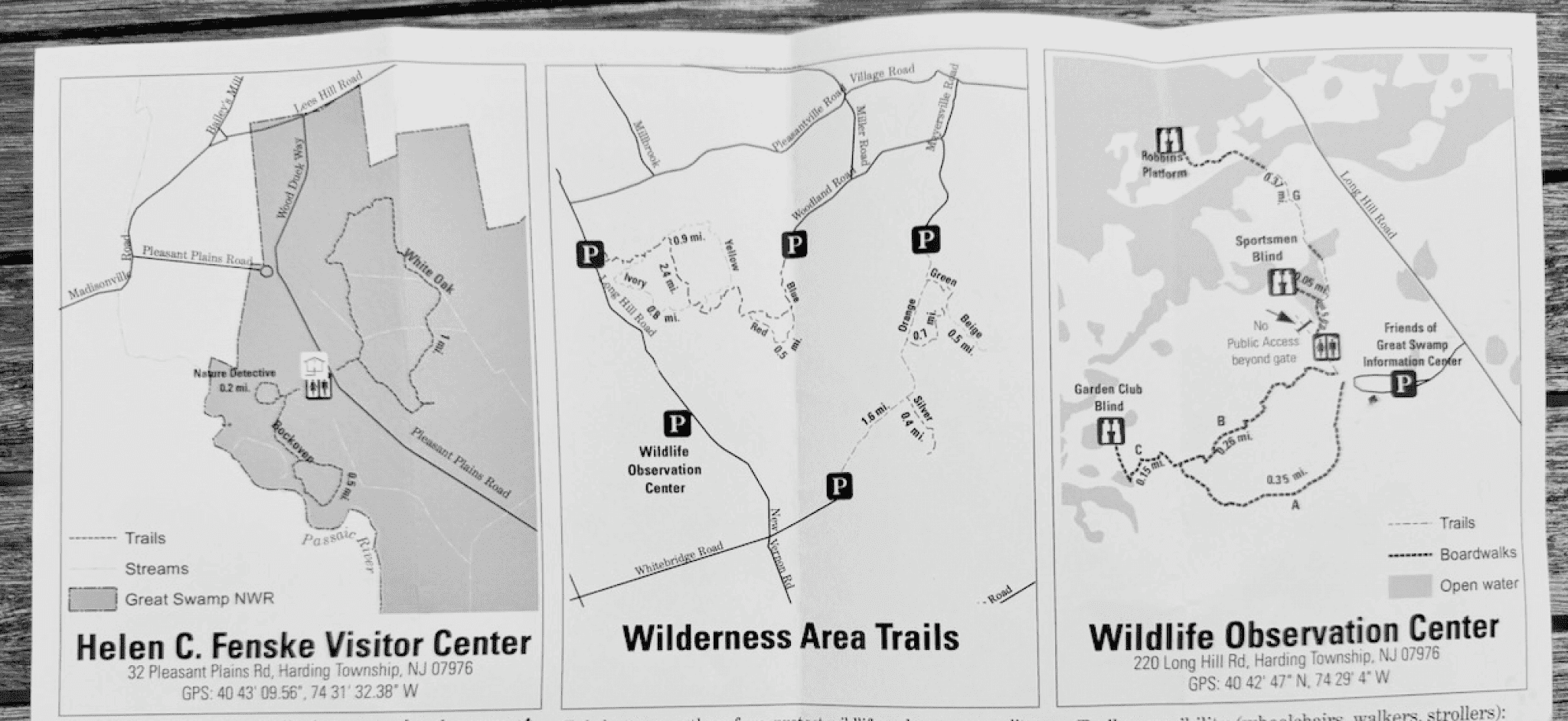
The trail maps show every point of access, parking areas, restroom locations, trail names, and so on throughout the Helen C. Fenske Visitor Center area, the Wildlife Observation Center, and the Wilderness Trails.
Beyond free tail maps, the visitor center grants access to these prime hiking and birding areas of the refuge, each of which I explain in more detail below.
White Oak Trail
Bockoven Trail
Kids “Nature Detective” Trail
Pleasant Plains Road
The White Oak Trail is among the top birding spots in the Great Swamp. Over 150 species have been seen on this trail alone (according to eBird). If you only have time for one birding stop at the Great Swamp, the White Oak Trail would be a great choice.
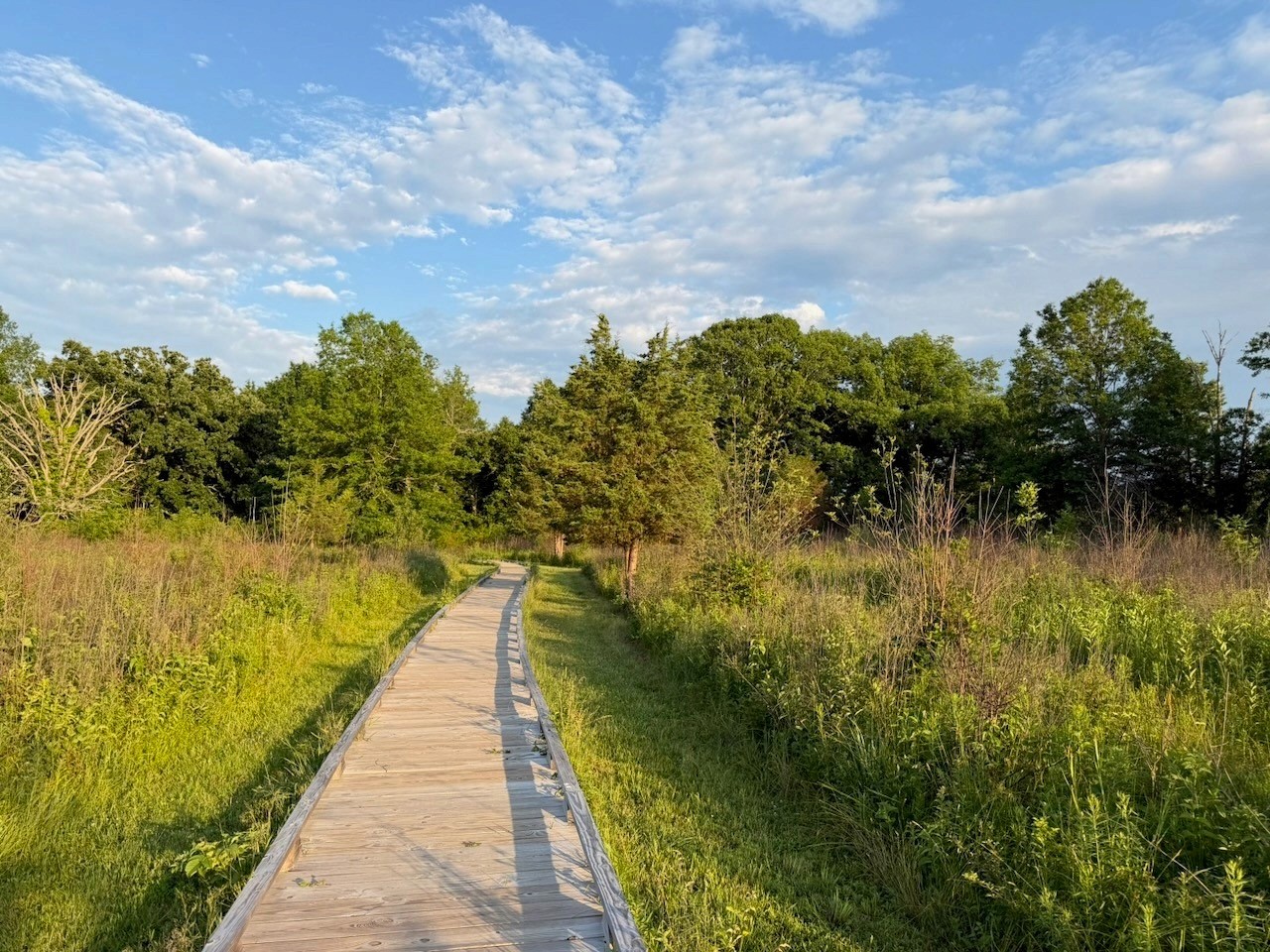
The White Oak Trail in the early summer of 2026
Here are some general guidelines to make the most of your time on the White Oak Trail.
Flat and easy: The trail is just about a mile long and is easy to walk in 20 minutes or less. It’s entirely flat and very well-maintained, so you won’t even need hiking shoes to make it all the way around with ease.
Few people and no bikes: Not having to compete with cyclists is a welcome feature of the White Oak trail and of nearly every trail in the Great Swamp. Though humans are welcome on the trail, you’ll rarely see more than a few, which makes the White Oak trail perfect for long quiet birding sessions.
Accessible to all: The trail was rebuilt in 2024 or so to accommodate wheelchair users. It now features wooden ADA-compliant platforms that cover almost all of the trail. The parts not covered by these platforms consist of crushed rock.
Buggy in the summer: The forested parts of the trail are rife with bugs, including mosquitoes, so be sure to wear bug spray or even a bug net covering your head and face. It makes the hike much more enjoyable.
Here are some birding-specific highlights and tips for the White Oak trail.
Diverse habitats: Though it’s short, the trail winds through a mix of dry open meadows, dense clumps of forest, and marshy wetlands, a variety that attracts a wide range of bird species, from waterbirds to raptors to warblers, depending on the season.
Meadow birds: In the open meadow sections of the trail look for Yellow Warblers throughout spring and summer—they nest here and are among the easiest warblers to see in the refuge. Other birds you’ll likely see in spring and summer include Common Yellowthroats, Cedar Waxwings, Red-winged Blackbirds, Carolina and Northern House Wrens (Marsh Wrens too, but more rarely), Eastern Bluebirds, Song Sparrows, Field Sparrows, and Swamp Sparrows (of course).
Forest birds: You’re almost guaranteed to see Eastern Towhees, Northern Cardinals, Gray Catbirds in the forested areas along the White Oak trail. Look for rarer species like the Rose-breasted Grosbeak in the areas where the forest meets the meadow, which they seem to prefer.
Vernal pool and deck: About halfway around the loop is one of the best and most accessible vernal pools (ponds that fill up after the spring thaw) in the refuge. A few years ago a new deck was installed with two benches that overlook the pond. Bird species to look for here include the Great Blue Heron, Green Heron, Belted Kingfisher, and many other native species that prefer ponds and marshlands. The vernal pool is also a fantastic spot to look for any of the rare turtle species that live in the refuge, such as the Spotted Turtle.
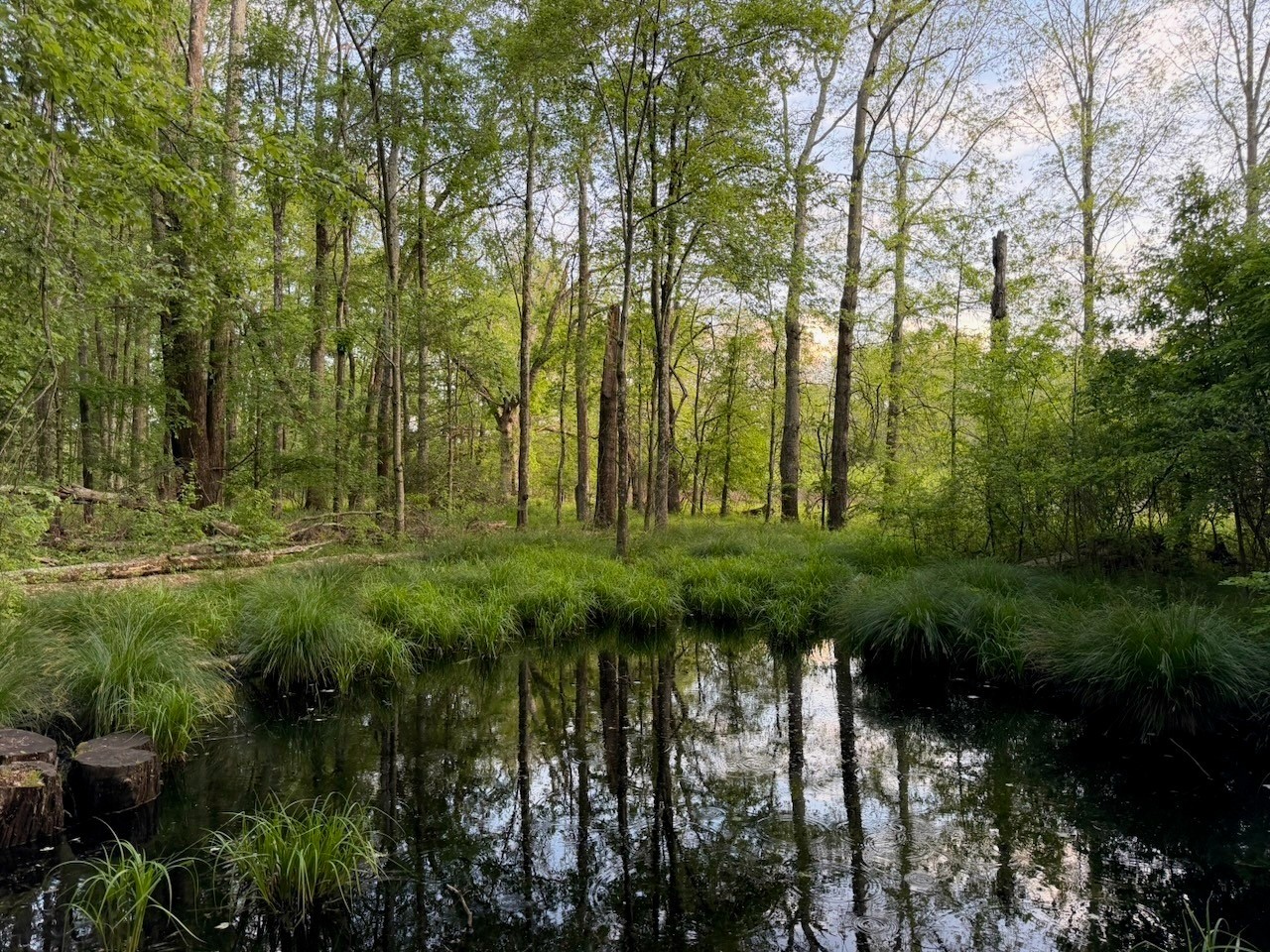
The vernal pool along the White Oak trail as seen from the deck overlook
The video below includes a complete real-time walkthrough of the entire White Oak trail, including some tips on where to find certain bird species along the way.
The Bockoven Trail is located at the far end of the parking lot opposite of where the White Oak Trail starts. If you’re facing the Welcome Center entrance, walk to the left until you reach the end of the parking lot and look for the big gazebo picnic area. Walk through (or around) the gazebo and you’ll see the start of the Bockoven Trail marked with a sign.
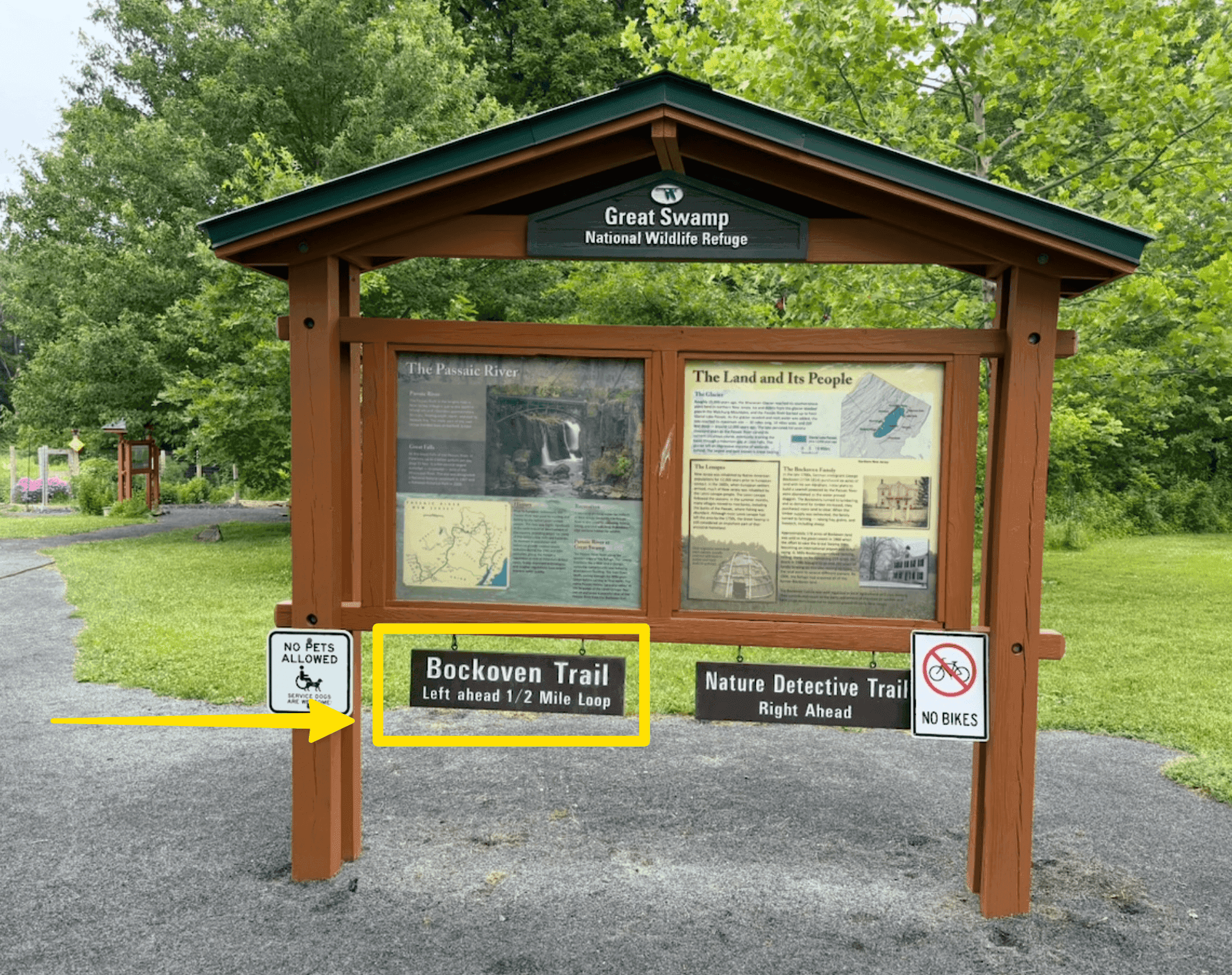
Sign at the start of the Bockoven Trail
The Bockoven Trail is a half-mile loop trail that’s mostly dense woods, except for the very first few hundred feet of the trail that goes through the meadow adjoining the parking lot.
Here are some general guidelines to make the most of your time on the Bockoven Trail.
Flat and easy: Much like the White Oak trail, the Bockoven trail is flat and easy to walk. You can walk the entire trail in about 10-15 minutes. It’s not as smooth and well-maintained as the White Oak trail, but you can walk it in everyday shoes or sneakers.
No elevated platforms: Unlike the White Oak trail, most of the Bockoven trail beyond the first part along the meadow is just a dirt trail in the forest.
Vernal pool deck: The Bockoven has a vernal pool overlook area about halfway around the loop, but I’ve never seen this pool fill in like the one on the White Oak trail. It’s more like a deck overlooking a bog.
Walk along the water: The Bockoven trail meets a tributary of the Passaic River at some points along the loop, several of which make for great spots for birding or just for sitting in a quiet spot along the water.

A tranquil spot along the Bockoven trail
Here are some birding-specific highlights and tips for the Bockoven trail.
Purple martins every spring: Just a few yards to the left of the sign at the start of the Bockoven trail are two towers full of human-provided Purple Martin nest boxes. Purple Martins are the largest swallows in North America and are somewhat rare to see in this part of New Jersey. If you visit this spot anytime between May and August or so, however, you are 100% guaranteed to see dozens of Purple Martins up close on their “porches” (each house has one) or flying around twittering their distinct soft calls over the fields nearby. (You can track the real-time progress of the Purple Martin “scouts” that return first each spring to breeding areas like the Great Swamp on the Purple Martin Conservation Association website.)
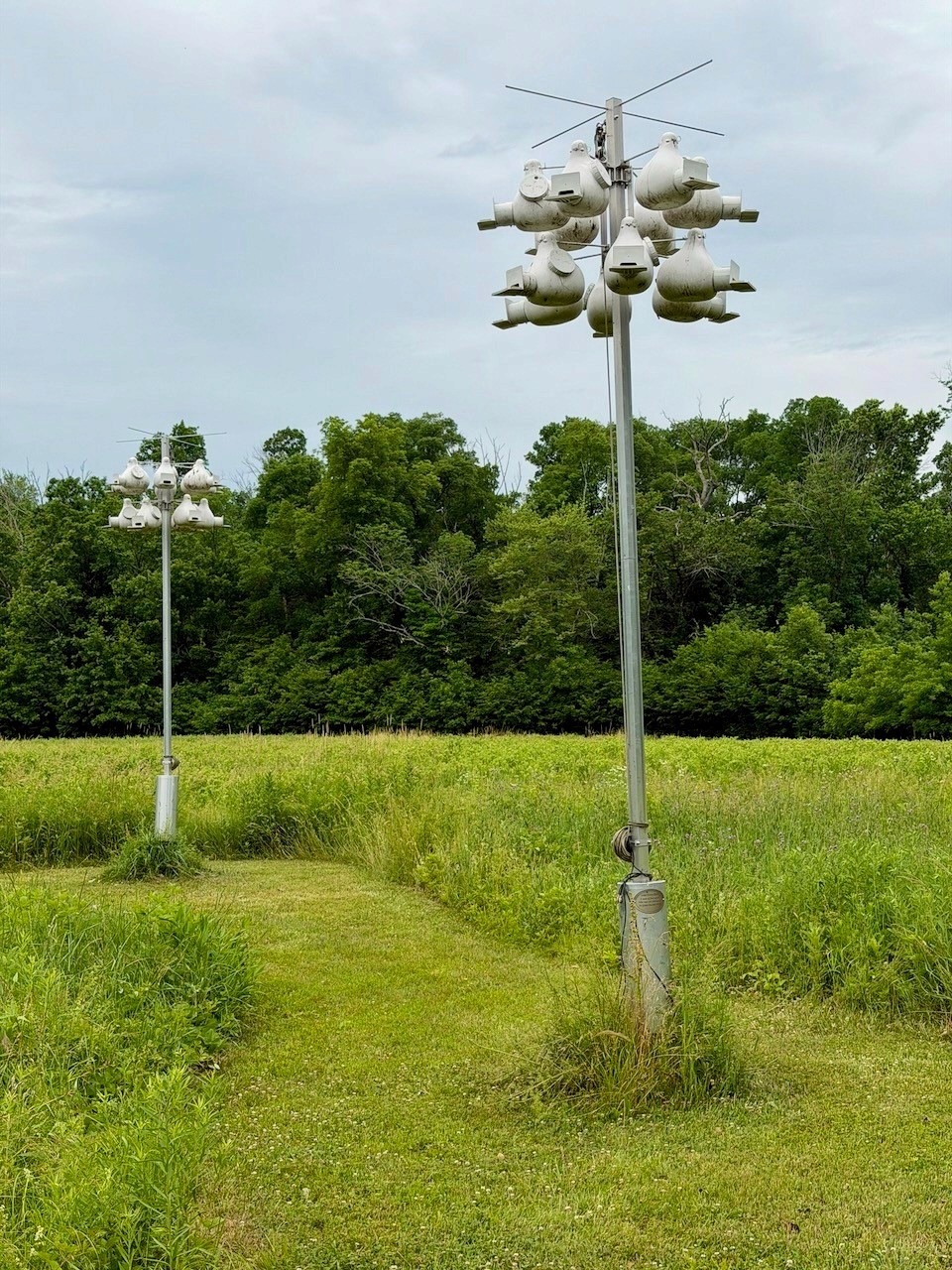
The Purple Martin nest towers just to the left of where the Bockoven Trail starts
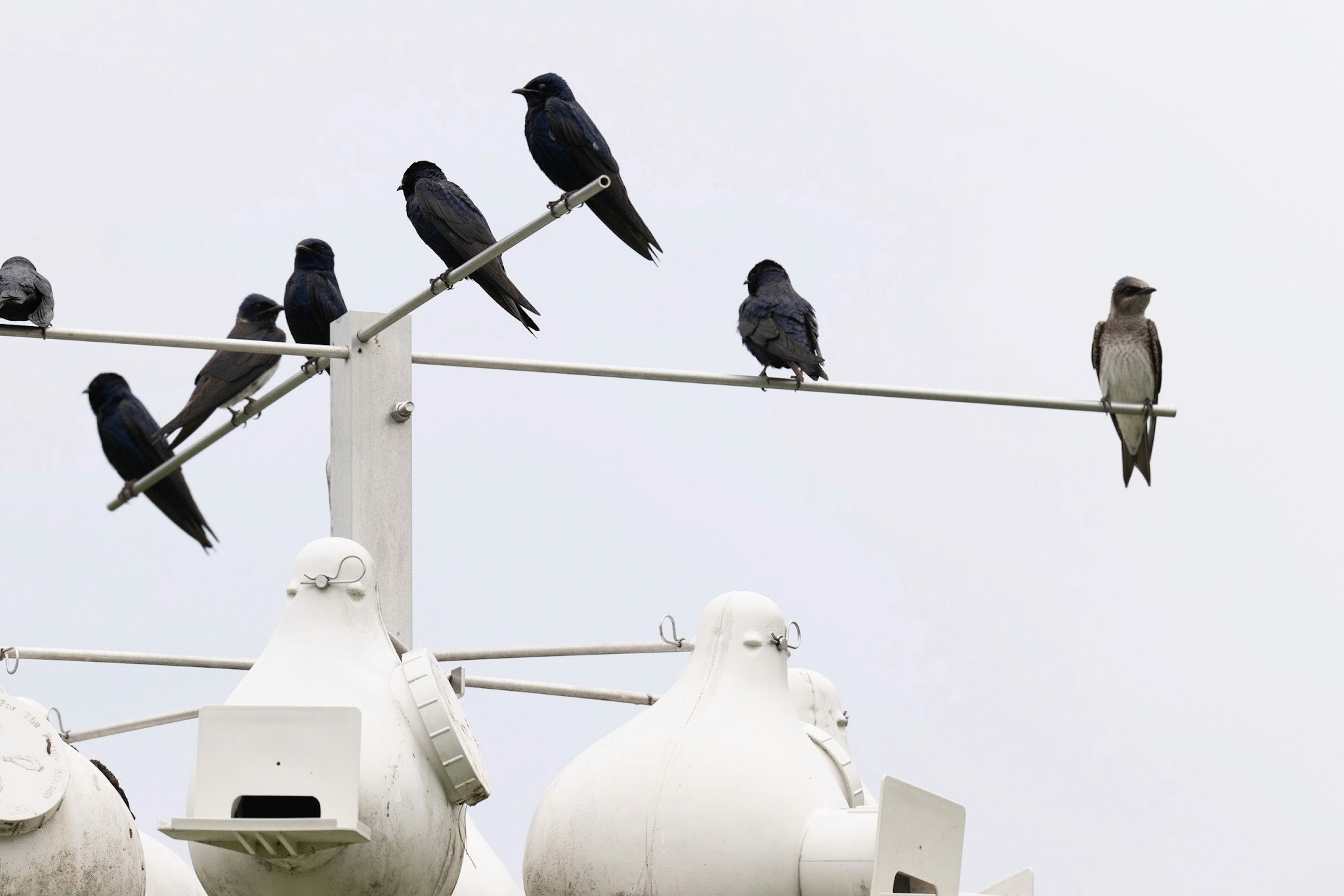
Purple Martins perched above their orb-shaped nest boxes.
Woodpeckers in the woods: The woodsy area that comprises most of the Bockoven trail is a fantastic spot to look for the various species of woodpeckers that inhabit this part of the swamp, including the Pileated Woodpecker, Hairy Woodpecker, Downy Woodpecker, Red-bellied Woodpecker, and Northern Flicker, all of which I have seen regularly along the Bockoven trail.
Warblers in spring: The Bockoven trail features some of the oldest and largest white oak trees in the Great Swamp. Warblers love to feed on the caterpillars that inhabit these oaks, so this spot is a great place to look for warblers high in the oak canopy during the spring migration, which usually peaks in the second and third week of May.
Milkweed meadow: The meadow on the left side of the first part of the Bockoven trail (the same one where the Purple Martin towers stand) is home to lots of milkweed, a plant that attracts tons of butterflies and other pollinators in late spring and early summer. Birds follow where insects thrive, making this meadow in turn a great place to look for species like the American Goldfinch, Common Yellowthroat, Yellow Warbler, and more.
The sign at the start of the Bockoven Trail also marks the start of the “Nature Detective” trail, a very short loop trail designed to engage kids in learning about birds and nature. The trail features a dozen or so signs that teach kids about how to identify (aka “detect”) plants, birds, and other animals that inhabit the swamp. It’s a well-maintained mulch trail that provides a great way for kids to appreciate and enjoy the swamp without having to endure a longer trek. The trail also includes a fenced-in pollinator garden that lets kids see native flowers and insects like moths and butterflies up close.
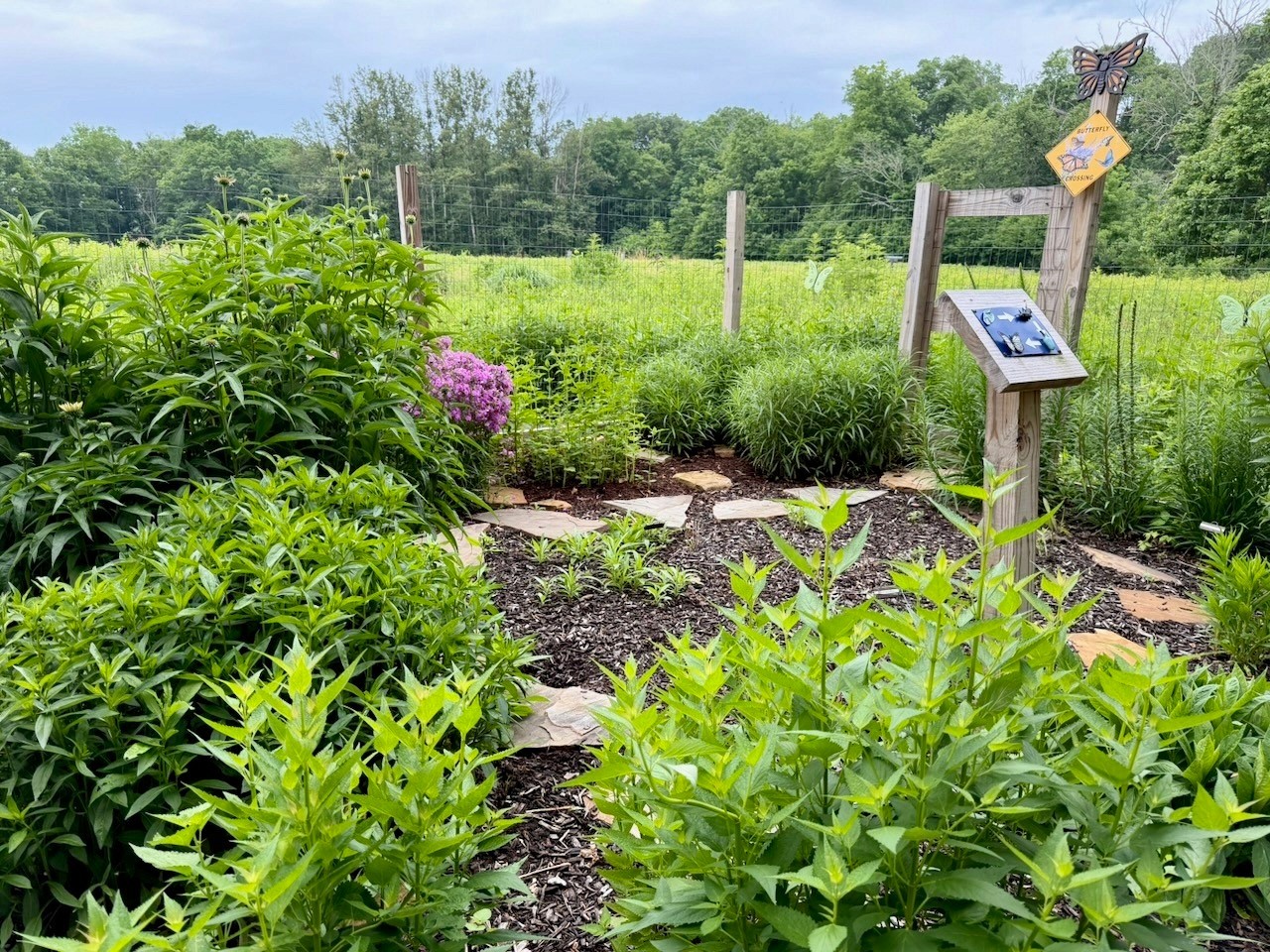
The pollinator garden near the start of the “Nature Detective” trail
Many visitors to the Helen C. Fenske Visitor Center area never venture onto the trails at all. Instead, they park in the lot by the visitor center and just walk up and down Pleasant Plains Road itself. The speed limit on the road is 15mph and few cars travel it, so Pleasant Plains has become somewhat of a large paved “trail” that is accessible to walkers, bikers, and wheelchair users.
Here are a few general guidelines about Pleasant Plains road:
The dreaded gate at the bridge: As the road unwinds south from the visitor center it eventually meets a bridge that crosses a creek called the Great Brook (Google Map). At the far end of the bridge is a metal gate that prevents automobile traffic from continuing beyond the bridge. Nobody seems to know exactly when this gate is opened and closed by the park rangers, but it is often (though not always) open from around 10am to 4pm on weekdays during the summer. All other times it’s best to plan for it to be closed.
The parking lot before the bridge: On the left side of the road just before the bridge is a small circular parking lot that can be used as a turnaround (if you get to the bridge and have to back up because the far gate is closed) or as a place to park. This parking lot is a nice little “secret” to know about as it’s almost always empty and provides a more central place to walk from: from the bridge you can easily walk back to the Welcome Center in 10 minutes or so, or you can head the other way and walk along the road beyond the metal gate, which is always open to pedestrian and bike traffic, even when the gate is closed.
GPS and the dreaded gate: Google Maps and perhaps other navigation software will not warn you about the gate, which means many drivers end up stuck on the bridge, forcing them to reverse back to the parking lot before the bridge to turn around. This maneuver can be perilous for walkers and bikers on the bridge or nearby, so if you're planning to drive over the bridge, stop about 100 feet before it and look to see if the gate is open. If it's not, park or turn around in the parking lot before the bridge.
Pleasant Plains road provides quick and easy access to some of the best birding spots at the Great Swamp:
The Bridge
The Lily Pond
The Overlook
The "Barred Owl" Woods
The Bluebird Parking Lot
The Bridge: The bridge with the metal gate also doubles as one of the main “gathering places” for Great Swamp birders. You’ll often see a few folks with binoculars or long telephoto lenses hanging out on the bridge looking northeast from the bridge. Looking in that direction, you can easily spot the Great Blue Heron that lives here and hunts almost every evening near the bridge. Insect eating birds like various species of Flycatchers, Swallows, and Eastern Phoebes love this spot too. From the bridge you will also see the beaver dam that spans the brook. When the dam is fully exposed above the water (it changes seasonally), look for birds and animals that use it as a resting spot when crossing the brook. In the springtime, the dam is great place to look for warblers. I’ve seen Palms Warblers, Black-and-White Warblers, and Blue-winged Warblers (among others) in mid-May there.

The resident Great Blue Heron hunting on the left bank of the Great Brook just northeast of the bridge on Pleasant Plains Road. Note the large flapping fish in its beak!
The Lily Pond: Just beyond the bridge on the right side of Pleasant Plains Road is a large pond that's covered in lilies during spring and summer. The lilies become so dense in summer that at times you can barely tell there's a pond there at all. In the spring and summer this a great spot to look for Belted Kingfishers—one resident male can often be seen perched in the trees at the very far end of the pond, or hunting from the trees on the right edge. Kids might enjoy trying to spot turtles in this pond too—look for a trail of mysteriously shaking lily plants, a telltale sign that a turtle is making its way through the water nearby. In the winter the lilies die back and the pond becomes an open haven for ducks and other waterfowl—I've seen a few dozen hooded mergansers here during wintertime.

The lily pond seen from the shore just off Pleasant Plains Road
The Overlook: About half a mile east of the bridge on the left side of Pleasant Plains Road is an excellent birding spot known as the Overlook (Google Map). In 2025 a new pond was dug here that makes it easy to see birds like American Goldfinches, Eastern Phoebes, Tree Swallows, and more from the comfort of your car—the pond is only a few yards from the parking lot. The Overlook is also special because here you can see all the way to the horizon without seeing any evidence of human beings or human development. Its perhaps the wildest and most expansive view in the entire refuge. This also makes it a great spot for seeing raptors like hawks, bald eagles, and harriers. I've seen several Northern Harriers (aka the "Gray Ghost") right from the Overlook parking lot.
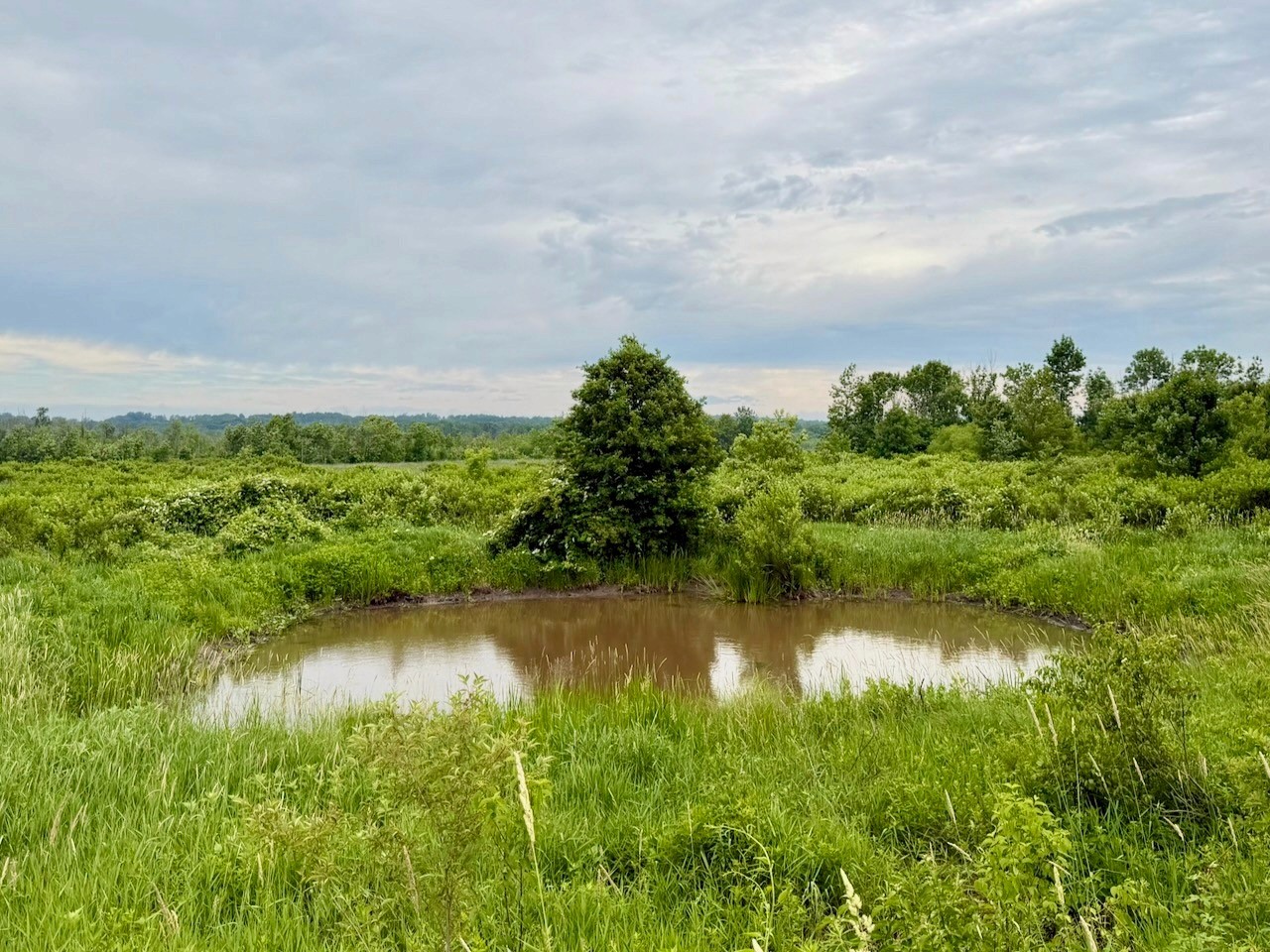
The new pond (added in 2025) as seen from the Overlook parking lot
The "Barred Owl" Woods: If you exit the Overlook and continue east on Pleasant Plains Road, you'll immediately be surrounded by dense woods on both sides of the road. Several Barred Owls have been spotted in these woods in the past few years, so this is a perfect place to listen and look for them starting about a half hour before sunset, or very early in the morning.
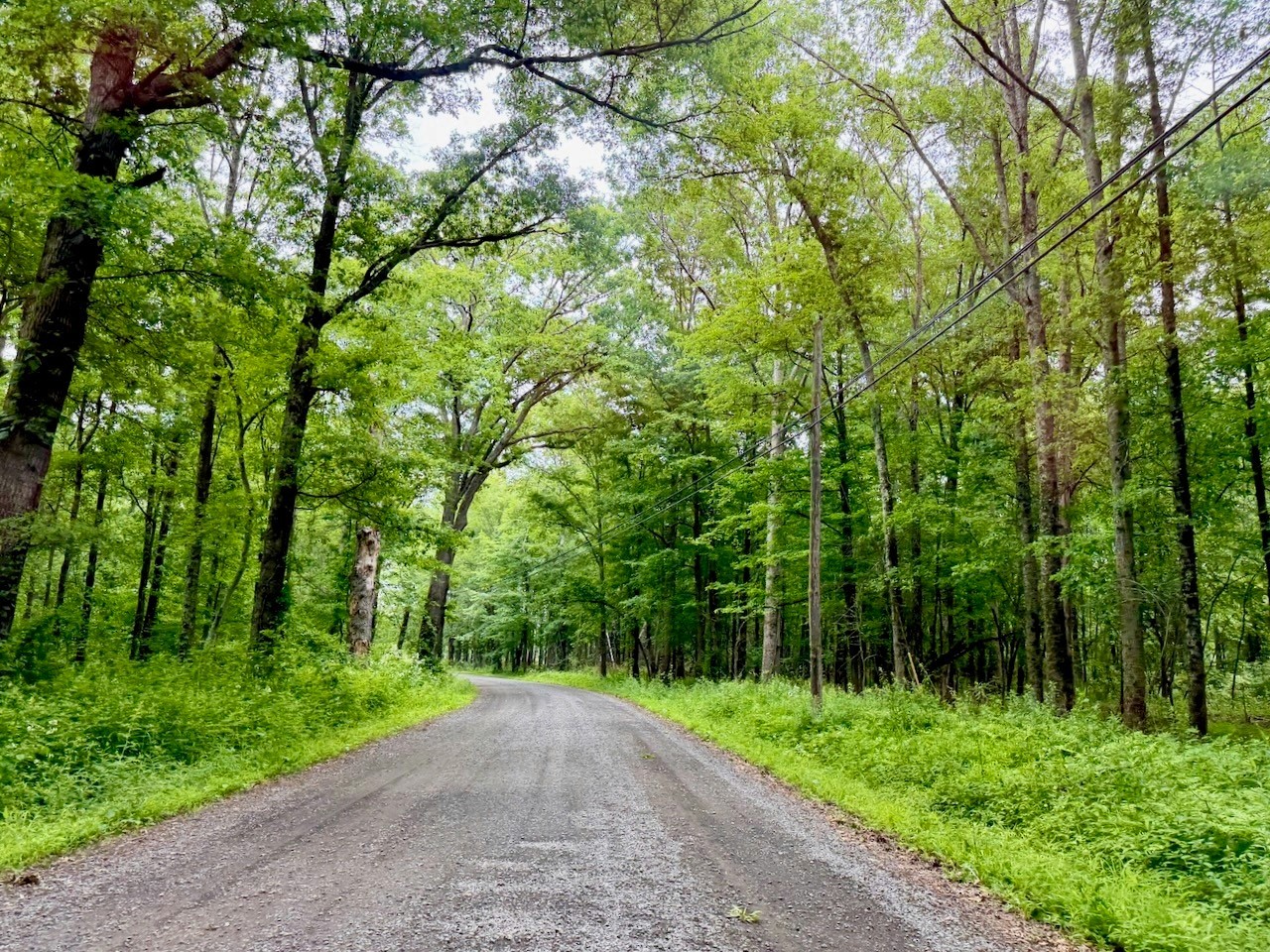
Pleasant Plains Road as it passes through the wooded area often frequented by Barred Owls
The Bluebird Parking Lot: About a thousand feet beyond the Barred Owl woods area, Pleasant Plains Road makes a sharp turn to the south, and another half mile or so from there on the left is the Bluebird Parking Lot (Google Map). The area around the Bluebird Parking Lot is fenced off an inaccessible, but even from the parking lot you are almost guaranteed to see Eastern Bluebirds in spring and summer thanks to the 140 or so nest boxes that have been installed throughout this area. The vast meadow just beyond the parking lot is also a great spot to look for soaring raptors, Tree Swallows, Red-winged Blackbirds, various sparrow species, and even the occasional Eastern Meadowlark. Added bonus: the Bluebird Parking Lot includes public restroom facilities.
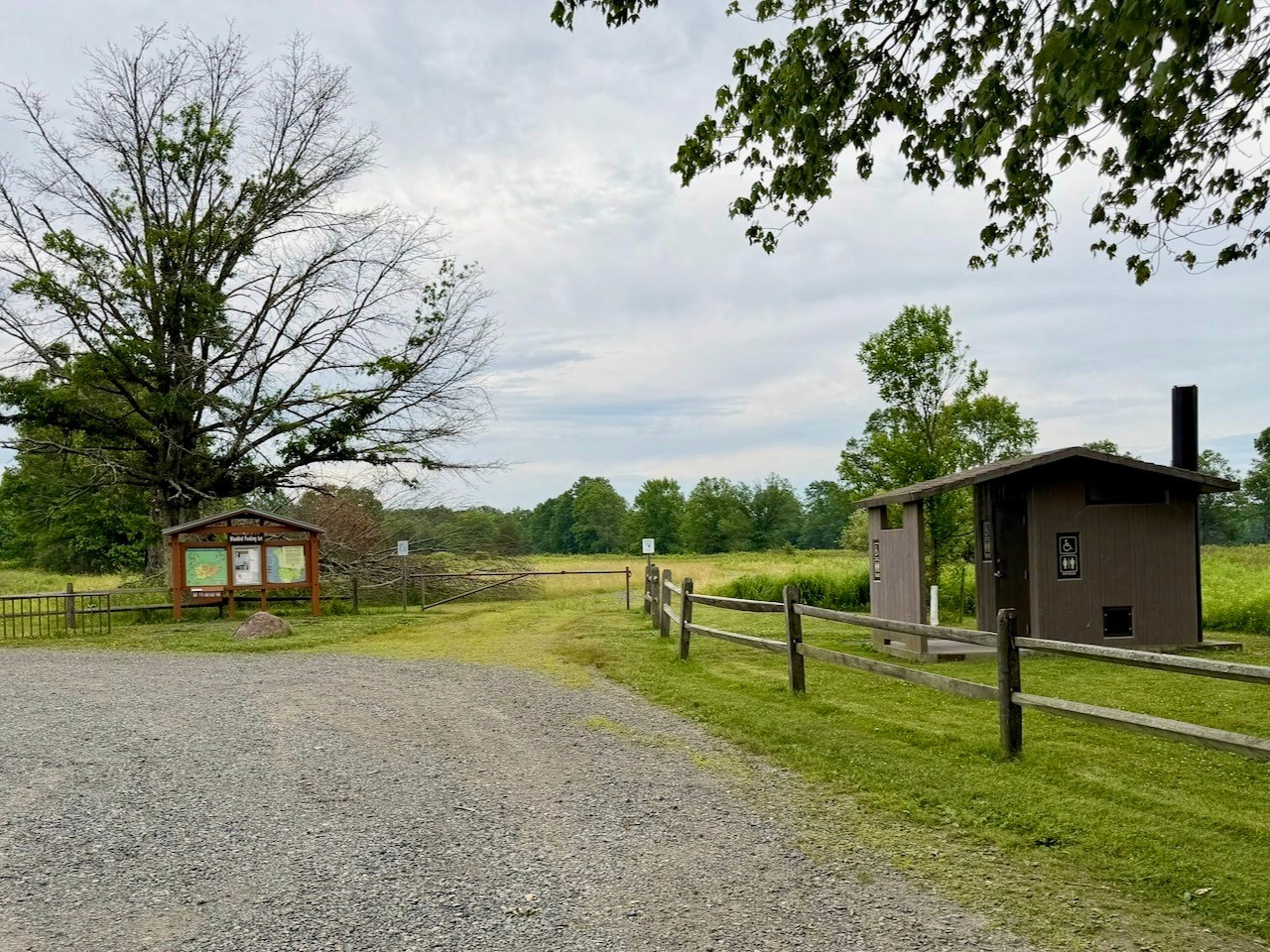
The Bluebird Parking Lot area (including public restrooms on the right)
Located at 220 Long Hill Rd in Gillette, New Jersey (Google Map), the Wildlife Observation Center (WOC) is the main access point to the west side of the Great Swamp National Wildlife Refuge. Like the Fenske visitor center, it provides a parking lot and easy access to various trails and other features like bird blinds and viewing platforms, but it does not have any buildings, exhibits, or rangers on duty. It does have public restrooms and a large free parking lot, just like the main visitor center. There are also usually one or two volunteers in the shed at the start of the trails (at the end of the parking lot) who can help answer questions and direct you to any of the main features of the WOC.
The three main attractions for birders at the WOC are the:
Garden Club Blind
Sportsmans Blind
C.S. Robbins Platform

Look for this sign at the start of the WOC trails
A "blind" is a viewing area designed to be unobtrusive and ideally invisible to birds and other wildlife, making it easy to observe them from close distances without disturbing them. The two blinds at the WOC both look out on the same large boggy meadow, but they provide slightly different vantage points. The terrain you travel through to get to each blind differs substantially, however, as I explain below. If you don't have too much time to spend at the swamp, hiking the little trails to each blind will give you a quick overview of what the swamp is all about. Both hikes are short, easy, and accessible to everyone, including wheelchair users.
The trail to the Garden Club blind consists entirely of elevated wooden platforms that take you directly over a wet boggy though also heavily forested part of the swamp. The water here is not usually deep enough for waterbirds like herons, but the woods and swampy shallow water provide a fantastic habitat for woodpeckers, warblers, and other songbirds. I've seen Norther Yellow Warblers, American Redstarts, Hooded Warblers, Veeries, Red-eyed Vireos, and many more species just on this short trail. In the spring of 2023 a pair of American Redstarts nested in a tree only a few feet from the trail, and I was lucky enough to get a photo of a fledgling being fed on its first day or so out of the nest. The latter portion of the trail just before you arrive at the blind is a bit drier and is a good place to look for Wild Turkeys. I've seen a few on different hikes in that woodsy spot just to the left of the trail there.

Female American Redstart feeding a fledgling along the Garden Club Blind trail
The Garden Club Blind is a small wooden shack placed at the highest part of the trail. Look through the rectangular "slits" in the sides of the blind to observe birds and other wildlife in the boggy marsh that surrounds the blind. This is a fantastic place to look for birds that like to hide in and feed among tall reeds, such as Common Yellowthroats, Northern Yellow Warblers, Red-winged Blackbirds, and various sparrow species. If you don't yet have a Swamp Sparrow on your lifelist, you probably will after visiting the Garden Club Blind.
The trail to the Sporstmens Blind starts off in the woods, but after a few hundred feet it takes you over the deepest swamp water traversed by any of the main trails in the refuge. You can't see the bottom of the black water here, which makes these waters highly appealing to various turtle species, including a few enormous snapping turtles. You're also likely to see ducks and waterbirds in this area, including a family of Canada Geese and Wood Ducks that nest here in the spring. From the Sportsmens Blind itself, located at the end the pathway over the deep water, you'll spot the same species you can see from the Garden Club Blind since both look out on the same reedy boggy habitat.